
Selecting Shore hardness for high-pressure O-rings
O-rings are an essential component in hydraulic systems subject to high pressure.
However, choosing the right material is not enough: selecting the correct Shore hardness can make the difference between a long-lasting seal and a critical leak.
In this article we focus on how to choose the right Shore hardness for O-rings in high-pressure applications, a key aspect in ensuring the reliability of the hydraulic system.
What is Shore hardness?
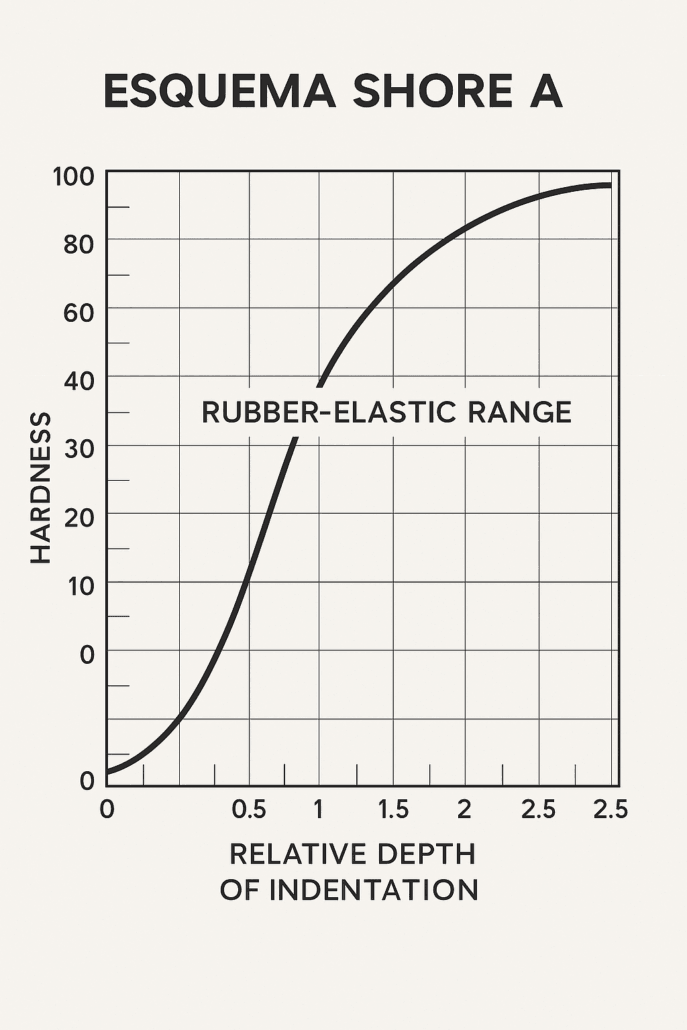
Shore hardness measures a material's resistance to indentation.
For rubber O-rings, the scale commonly used is
Shore A, with values ranging from 40 to 90.
- Shore A 70: the usual standard in industrial applications.
- Shore A 80 or 90: recommended for higher pressures.
- Shore A 60 or less: used where greater flexibility is needed or on uneven surfaces.
Key factors for high pressure
Choosing the right hardness for an O-ring in high-pressure applications requires several factors to be taken into account:
System pressure: the higher the pressure, the higher the recommended hardness.
Groove tolerances: if the tolerance is very tight, a harder O-ring may perform better.
Type of fluid: some hydraulic oils require seals with greater resistance to compression set.
Temperature: high temperatures can soften the elastomer, so a higher initial hardness is advisable.
Common mistakes when selecting seals for pressure
- Choosing a seal that is too soft and extrudes under pressure.
- Not taking into account the thermal expansion of the fluid or of the material itself.
- Assuming that a single hardness is suitable for all operating conditions.
Technical recommendation for high-pressure hydraulic systems
For standard high-pressure hydraulic systems (in the 200–400 bar range), we recommend:
- Material: NBR or FKM depending on the type of fluid and the chemical conditions.
- Hardness: Shore A 80 or 90, to minimise the risk of extrusion.
- Design: a groove with tight tolerances and, if necessary, metal back-up or anti-extrusion elements.
If you need a more complete overview of types, materials and fields of application, see our main section on industrial O-rings
At Manufactures Cusell we manufacture custom O-rings for hydraulic and pneumatic systems, adapted to the pressure, temperature and fluid conditions of each project.
Any questions? Contact our team of experts