
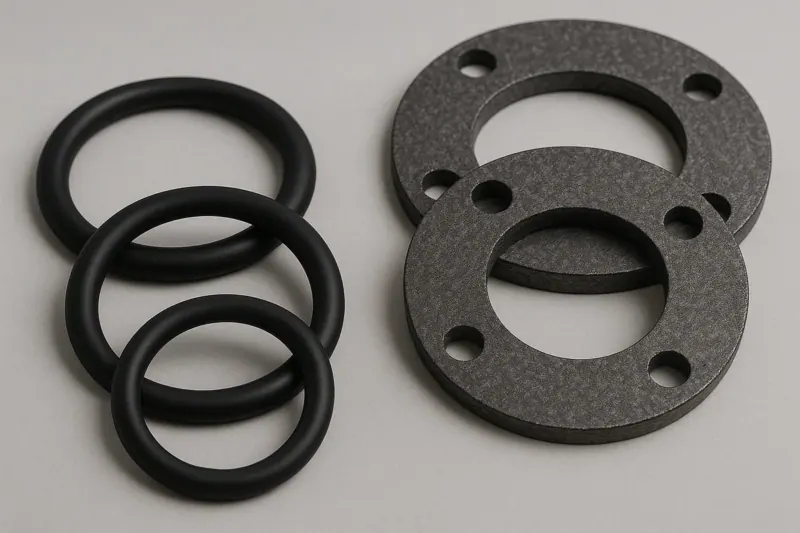
Industrial gaskets in water systems: uses, applications and materials
Introduction
In the complex world of water installations and pipelines, industrial gaskets are essential components for ensuring the safety, sealing and efficiency of systems. From the abstraction and distribution of drinking water to the treatment and storage of wastewater, these components are responsible for maintaining the integrity of joints between pipes, equipment and tanks.
In this article, we look at the main types of industrial gasket used in the water sector, their specific functions and the materials most commonly used to make them, with practical application examples.
Sealing gaskets
Sealing gaskets are designed to prevent leaks and fluid loss at the joints of pipes, valves and pressurised tanks. Their job is to ensure an airtight seal, even under pressure or vibration.
A typical example is the EPDM rubber gaskets used in drinking water networks. This material combines excellent elasticity with resistance to ageing, ultraviolet radiation and the chemicals used in water treatment. This makes it an ideal option for systems that demand long-term sealing and durability.
Expansion joints
Expansion joints absorb the thermal movements, vibrations and structural displacements that occur in pipes as a result of changes in temperature and pressure. Their purpose is to avoid stresses that could cause cracks or deformation in the installation.
Metal expansion joints are commonly used in central heating and HVAC networks, as they can withstand high temperatures and offer great mechanical strength. These joints protect the structure of the installation and extend its service life.
Flange gaskets
When two sections of pipe or pieces of equipment have to be bolted together, flange gaskets are used. Their job is to create a uniform seal between the metal surfaces, guaranteeing tightness even under pressure.
Graphite fibre gaskets are an excellent solution for this type of joint, especially in seawater treatment or desalination systems, where resistance to high temperatures and aggressive chemicals is required. Their laminated structure withstands high pressures without deteriorating, making them a safe, durable alternative.
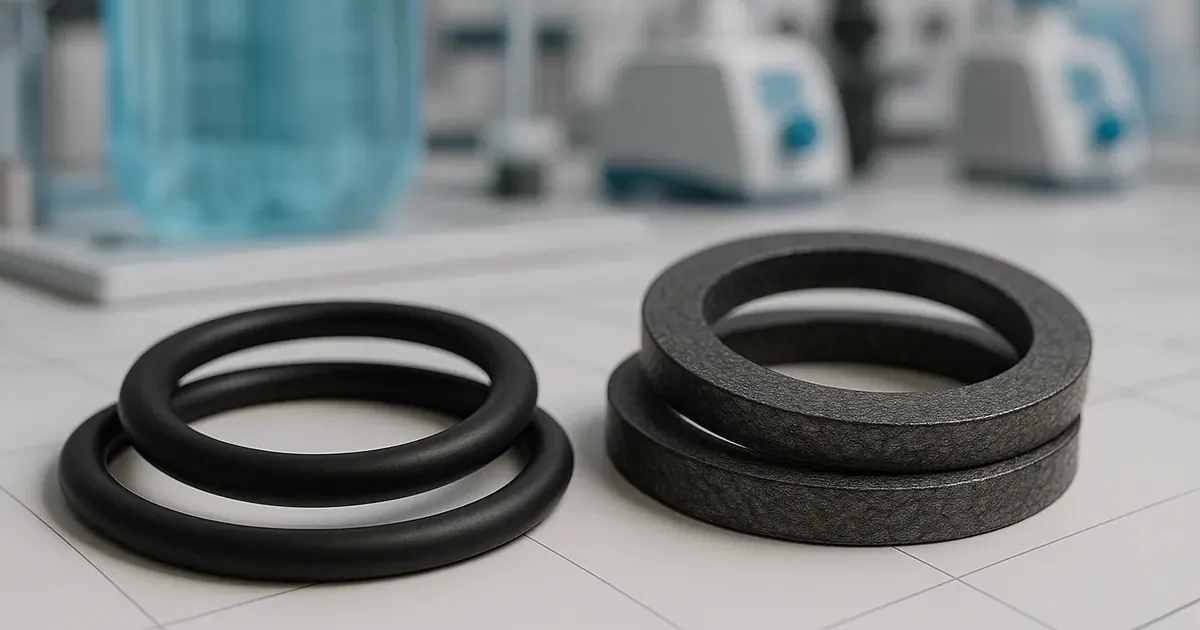
Most common materials in industrial gaskets for water
EPDM rubber
Ideal for applications that require weathering resistance and chemical stability. Used in drinking water pipelines, sanitary installations and sewerage systems.
Example: EPDM rubber expansion joints in municipal drainage or wastewater treatment systems.
Stainless steel
Its corrosion resistance and high durability make it indispensable in damp or aggressive environments, such as industrial wastewater treatment plants.
Example: stainless steel flange gaskets in pumping or treatment mains.
Graphite fibre
A versatile material that is highly resistant to heat and chemicals. Used in corrosive or high-temperature environments, such as pumping stations or desalination processes.
Example: graphite fibre gaskets in flanges exposed to steam or saline water.
Conclusion
Industrial gaskets are a silent but essential component of any water system. Correct design and selection guarantee the safety of installations, reduce maintenance costs and extend the service life of equipment. From the elasticity of EPDM rubber to the robustness of stainless steel and the resistance of graphite fibre, each material provides specific solutions to the challenges of the sector.
At Manufactures Cusell, we develop and supply a wide range of industrial gaskets tailored to every need: supply, treatment, desalination or industrial water transport. Our commitment to quality and innovation enables us to offer reliable, long-lasting sealing solutions worldwide.