
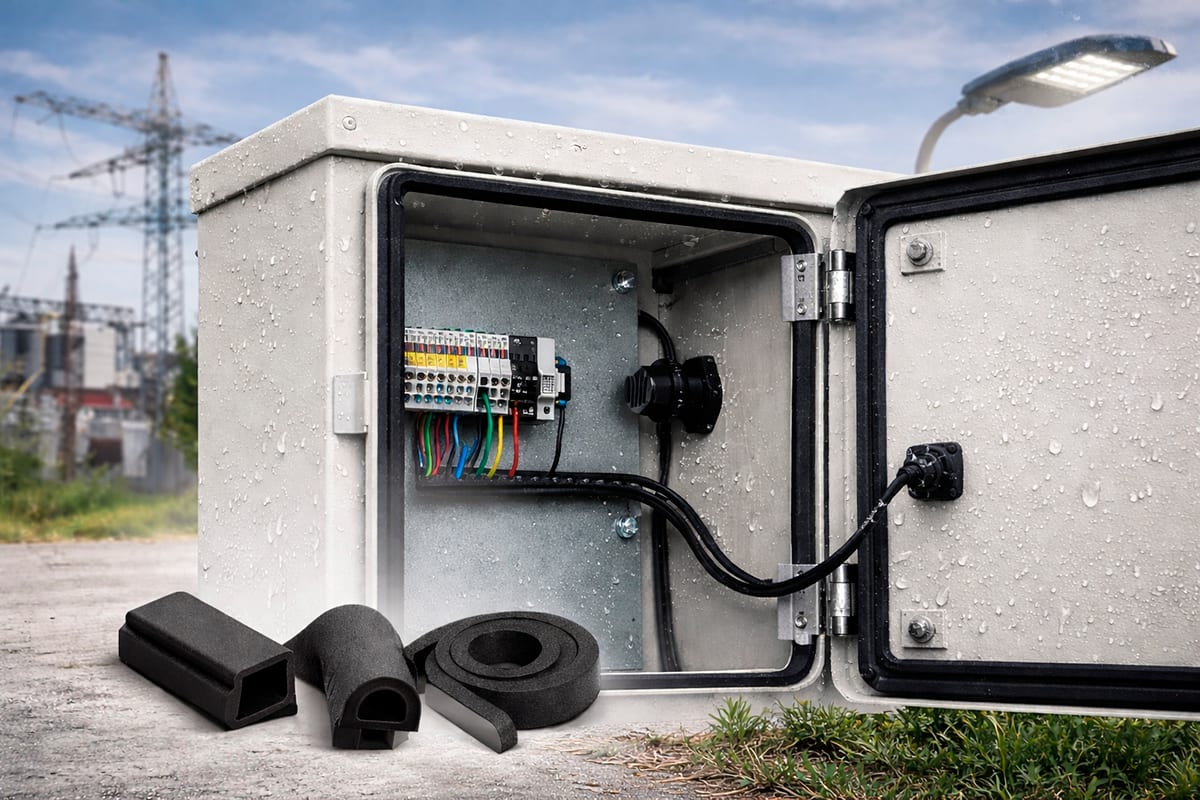
Guide to gaskets for outdoor electrical panels and enclosures (IP65–IP67)
Gaskets for outdoor electrical panels and enclosures (also LED, telecom and substations) are exposed to UV, ozone, rain, salt spray and thermal cycling. To maintain the seal and reduce incidents, the gasket material is decisive. In this guide we explain when to choose EPDM, which formats are most common and how to specify the gasket to meet the required degree of protection (IP / NEMA).
Why choose EPDM for outdoor electrical panels and enclosures?
EPDM rubber (ethylene propylene diene) is characterised by its excellent weathering resistance, its elastic behaviour and its low maintenance cost. Compared with other elastomers —for example, silicone gaskets— EPDM withstands UV radiation, ozone and salt spray well without cracking.
- Temperature range: –50 °C to +140 °C
- Standard hardnesses: 60 ± 5 Shore A (others on request)
- Chemical compatibility: water, hydraulic fluids, alcohols, brake fluids and neutral cleaning agents
Typical outdoor applications (electrical and electronics)
- Outdoor electrical panels and control cabinets (sealing against dust/water).
- Luminaire covers and housings (LED) subject to vibration and condensation.
- Doors and access hatches in substations and transformer stations.
- Telecommunications boxes exposed to marine or industrial environments.
Formats available at Manufactures Cusell
Depending on the closure design, tolerances and vibration, we manufacture various EPDM formats. For general information on the material and manufacturing options, you can also visit our EPDM gaskets page.
| Format | Typical application | Behaviour |
|---|---|---|
| Solid | IP65 / IP67 electrical panels | High sealing |
| Sponge (closed-cell) | LED streetlight covers | Medium sealing + absorbs vibration |
| Extruded profiles | Substation doors | High sealing + easy fitting |
EPDM vs other rubber gaskets (quick criteria)
When the seal must withstand oils or fuels, NBR or FKM (Viton®) gaskets are usually preferable. However, for outdoor environments with solar radiation and thermal cycling, EPDM retains its properties for longer, making it a widely used option for outdoor electrical enclosures.
Key steps to specify the right gasket
- Define the degree of protection required (IP / NEMA) and the test scenario (water jet, immersion, fine dust, etc.).
- Design the groove: tolerances, continuity of the bead and recommended compression of 20–30 %.
- Check chemical compatibility with cleaning agents and the environment (salt spray, industrial atmosphere).
- Choose hardness and format according to the available closing force and any vibration or deformation of the assembly.
Frequently asked questions
What gasket thickness do I need for IP67?
An effective compression of around 25 % is usually a practical reference for achieving IP67. Standard enclosures typically use thicknesses of 3 to 6 mm, although the final selection depends on the groove and the closing force.
Can I use EPDM in the presence of mineral oils?
It is not recommended. In that case, it is better to opt for NBR or FKM (Viton®) solutions. If your application is better suited to circular seals, also take a look at our O-rings.
Is there EPDM certified for drinking water?
Yes. We have EPDM formulations with WRAS / ACS approvals for projects that require them.